Stone Polishing Solutions

Restoration

Coating & Sealer Removal

Stripping failed topical coatings, polymer gloss and old sealers back to raw stone so the surface can be read and restored.

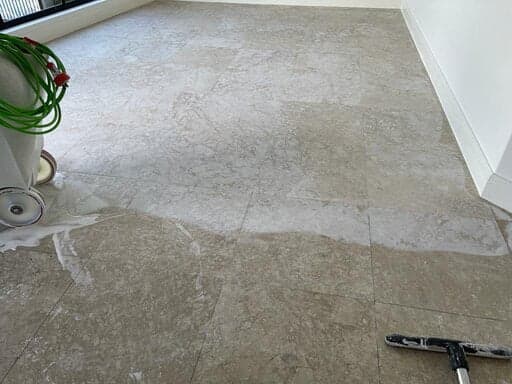
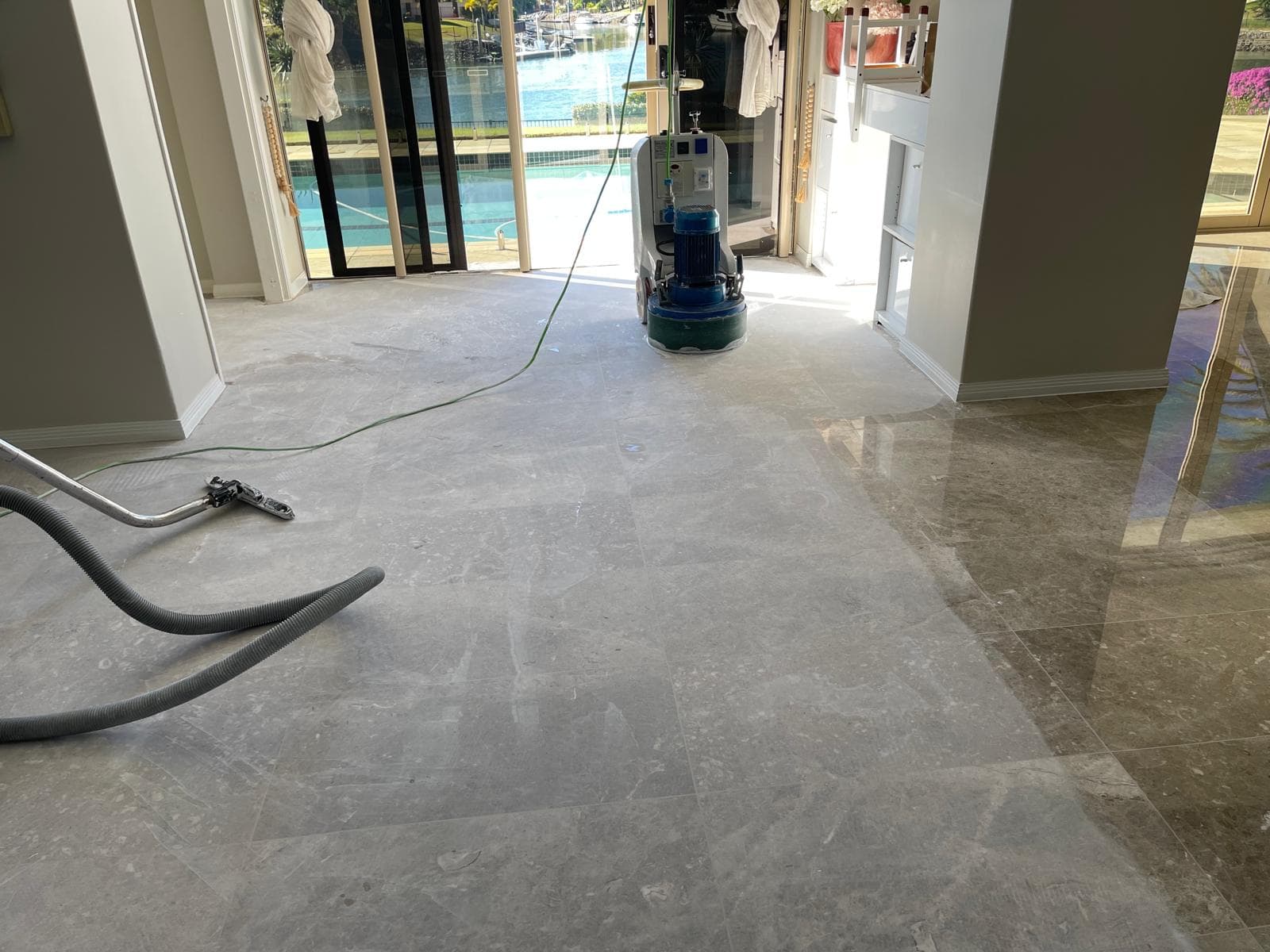
Diamond grinding removing a failed surface coating from stone

The problem

What actually goes wrong

Topical coatings are sold as an easy answer to dull stone, and they do look convincing at first. They are also a layer of plastic sitting on the surface, and they wear through where people walk. The result is glossy at the edges of a room and cloudy in the traffic lanes, and it cannot be spot-repaired because the boundary between worn and unworn always shows.

Coatings also trap what is underneath. Moisture, staining and previous damage are sealed in, and the stone stops behaving like stone — it can no longer breathe, and on some substrates that causes further problems.

Multiple layers accumulate over years as each failure is answered with another coat.

Assessment

What gets established before any work starts

These decide the method. Answering them wrong wastes an entire stage.

  • Confirming there is a coating at all, and how many layers. This is the single most misdiagnosed thing about a tired stone floor — much apparently damaged stone is sound stone under a failed coating.
  • Identifying the coating type where possible, since acrylics, polyurethanes and waxes respond to different removal methods.
  • Testing removal in an inconspicuous area to establish what the stone underneath is actually like.
  • Checking for staining that the coating has been concealing, which becomes visible once it comes off and needs to be part of the plan.

Approach

How the work is decided

Described as a set of judgements rather than a fixed sequence, because that is how it genuinely works.

Removal method is chosen for the coating and the stone, and tested before being applied broadly. Chemical stripping suits some coatings; mechanical removal suits others, and on softer stone the wrong choice damages the surface.

The stone is brought back to a raw, uncoated state so it can be assessed honestly. Only then is a restoration method chosen, because until the coating is off nobody can see what they are dealing with.

Residue in joints and at edges is dealt with specifically. Stripper that has run into grout lines and dried there will show through any subsequent finish.

What replaces the coating is a deliberate decision. Often the answer is a mechanically polished stone surface with an impregnating sealer, which cannot wear through in the way a topical film does.
Stages that may be involved

  1. 01Coating Removal
  2. 02Grinding
  3. 03Honing
  4. 04Polishing
  5. 05Sealing

Not every stage applies to every job. Which are used is decided at assessment.

Practicalities

Things worth knowing in advance

The details that affect how the job runs, and that are easier to plan for than to discover midway.

What is revealed may need more work
A coating hides things. Once it is off, staining, etching or previous poor repairs can appear. This is not new damage — it was always there — but it does mean the scope after stripping is clearer than the scope before it.
Chemical removal needs containment
Strippers are aggressive by design. They need controlling around joinery, skirtings, fixtures and adjacent finishes, and they need to be fully neutralised and removed before anything else happens.

Limits

What restoration will not fix

Stated plainly, because finding out on the day suits nobody.

  • Where a coating has been in place a long time it may have discoloured the stone itself, which does not necessarily reverse on removal.
  • Some coatings have penetrated rather than remained topical, and those cannot be fully removed.

Materials

Stone this applies to

Each material behaves differently. The reference pages cover how, and how to look after them.

Questions

Common questions

Have the stone assessed properly

Send photographs and a short description and you will get a straight answer about what the surface needs — including if the answer is that it does not need us.