Stone Polishing Solutions

Marble · Technical guide

Marble Etch Removal & Acid Damage Restoration

Dull marks left by wine, lemon or the wrong cleaner are damage to the stone's surface, not dirt sitting on it. What they are, why cleaning and wax won't remove them, and how the surface is restored.

An etch is what happens when acid meets calcite. Marble is almost entirely calcium carbonate, so wine, citrus, vinegar, soft drinks and many bathroom and tile cleaners dissolve a very thin layer of the surface. What is left is rougher than the stone around it, so it scatters light instead of reflecting it: a dull ring, drip or wipe mark that shows from certain angles.

Because the mark is a change to the stone itself, there is nothing on the surface to clean off. That is why scrubbing, poulticing and re-sealing make no difference, and why the fix is to restore the surface rather than treat the mark.

Assessed first

The condition decides the method

  • Confirming the mark is an etch, not a stain, a coating defect or a surface deposit
  • Checking for wax, polish or a topical sealer that has to come off first
  • Gauging the depth and extent of the etching, which decides where refinishing starts
  • Agreeing the finish to match, and how the repaired area will blend with the stone around it

Diagnosis

Etch or stain?

Etch

  • Lighter or duller than the surrounding stone
  • On polished marble, feels slightly less smooth to the fingertip
  • Most visible in reflected light; can almost disappear viewed straight down
  • Shaped like the spill: a ring, drip or wipe pattern

Stain

  • Usually darker than the surrounding stone, or a distinct colour
  • The surface feels as smooth as the rest
  • Visible from any angle, because it is in the stone rather than on its surface
  • Edges often soften or spread where the liquid wicked in

They can happen together. A red wine spill can both etch and stain, and in that case the stain is treated before the surface is refinished.

Marble Etch Removal & Acid Damage Restoration in detail

Etching on polished and honed marble

On polished marble an etch is obvious because it interrupts a mirror-like reflection. Even a light etch reads as a dull patch.

On honed marble the surface is already matte, so light etching is often less visible. It may show as a slightly paler or patchy area rather than a dull spot. The correction has to bring the area back to the same honed texture, not polish it, or the repair becomes the thing you notice.
Why waxes, polishes and cleaners are not a fix

Many retail marble polishes, waxes and topical coatings work by filling the roughened surface or laying a glossy film over it. The mark looks better for a while, then the film wears and the etch comes back, often with a patchy layer of product that has to be removed before the stone can be restored properly.

General cleaners cannot reverse an etch, and many supermarket products are acidic enough to cause more of it. Restoring the stone means removing the damaged surface and refining what is underneath until it matches the surrounding finish.

Professional mechanical refinishing

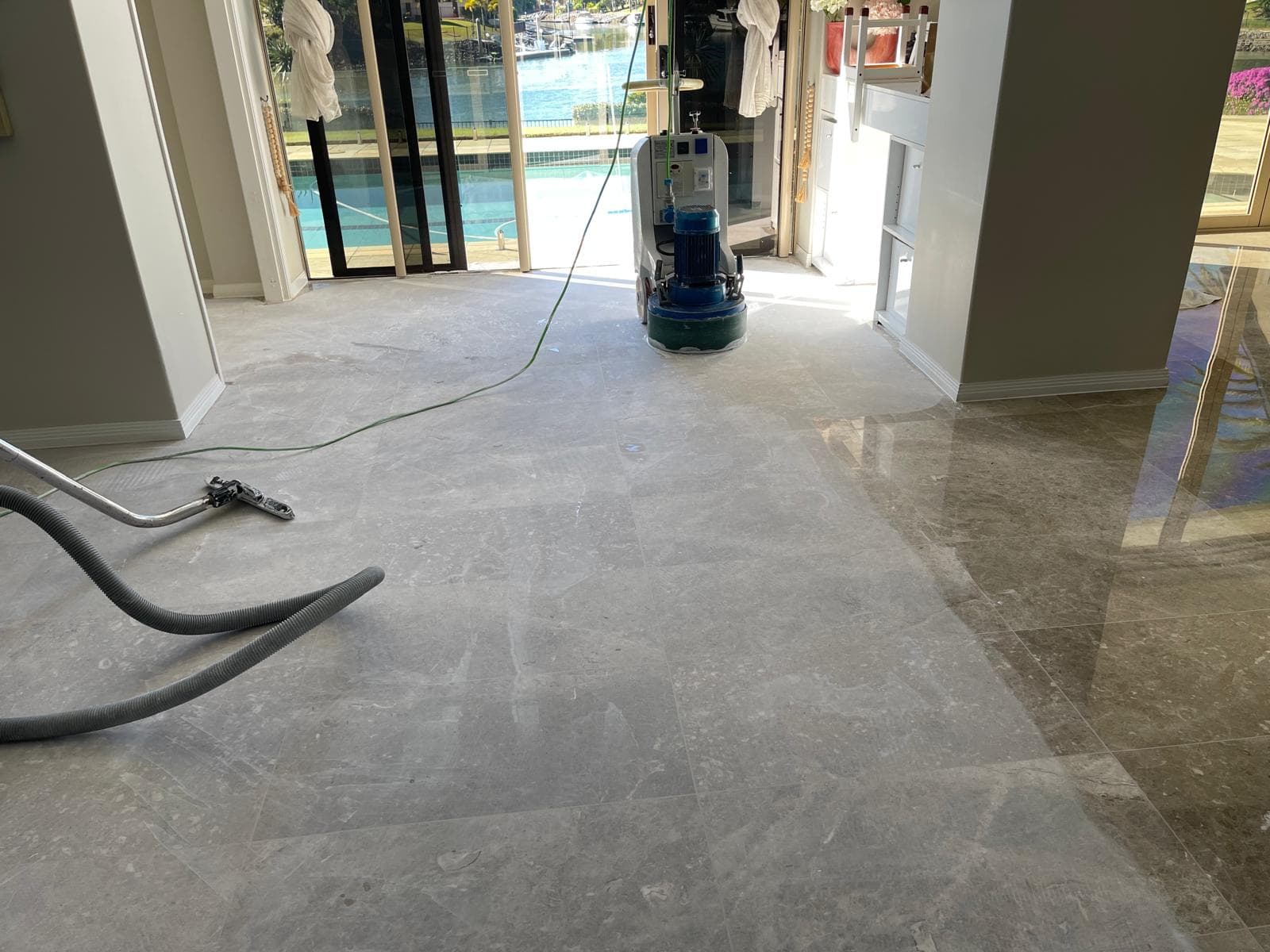
Light etching on polished marble can sometimes be corrected by refining and polishing just the affected area. Deeper or widespread etching needs the surface taken back with progressively finer diamond abrasives, then refined to the required finish, whether honed or polished.

The right starting point depends on how deep the damage is, whether anything has been applied over the stone, and how the repaired area has to blend with the surface around it. That is decided on the actual surface, not from a standard sequence.

On a floor that has worn overall, refinishing one etched area so it blends perfectly is not always realistic. Sometimes refinishing the whole visible area gives the more consistent result.

From the Workshop — Tony Mastrorillo

40+ Years of Hands-On Stone Restoration Experience

Etching looks like a single problem, but the right method depends on the stone, its condition and the finish it has to match. A light mark on a polished vanity and widespread dullness across a honed kitchen floor are different jobs, even though both are etching.

Tony's approach is to assess the actual surface first: what the stone is, whether anything has been applied over it, and how deep the damage goes. Only then is the method chosen, removing as much as the result requires and no more.

Before founding Stone Polishing Solutions, Tony carried out restoration and maintenance on the Sydney Cove 1808 Map at First Fleet Park, including controlled mechanical diamond refinement and the removal of deteriorated protective coatings.

From our work

Example of our marble work

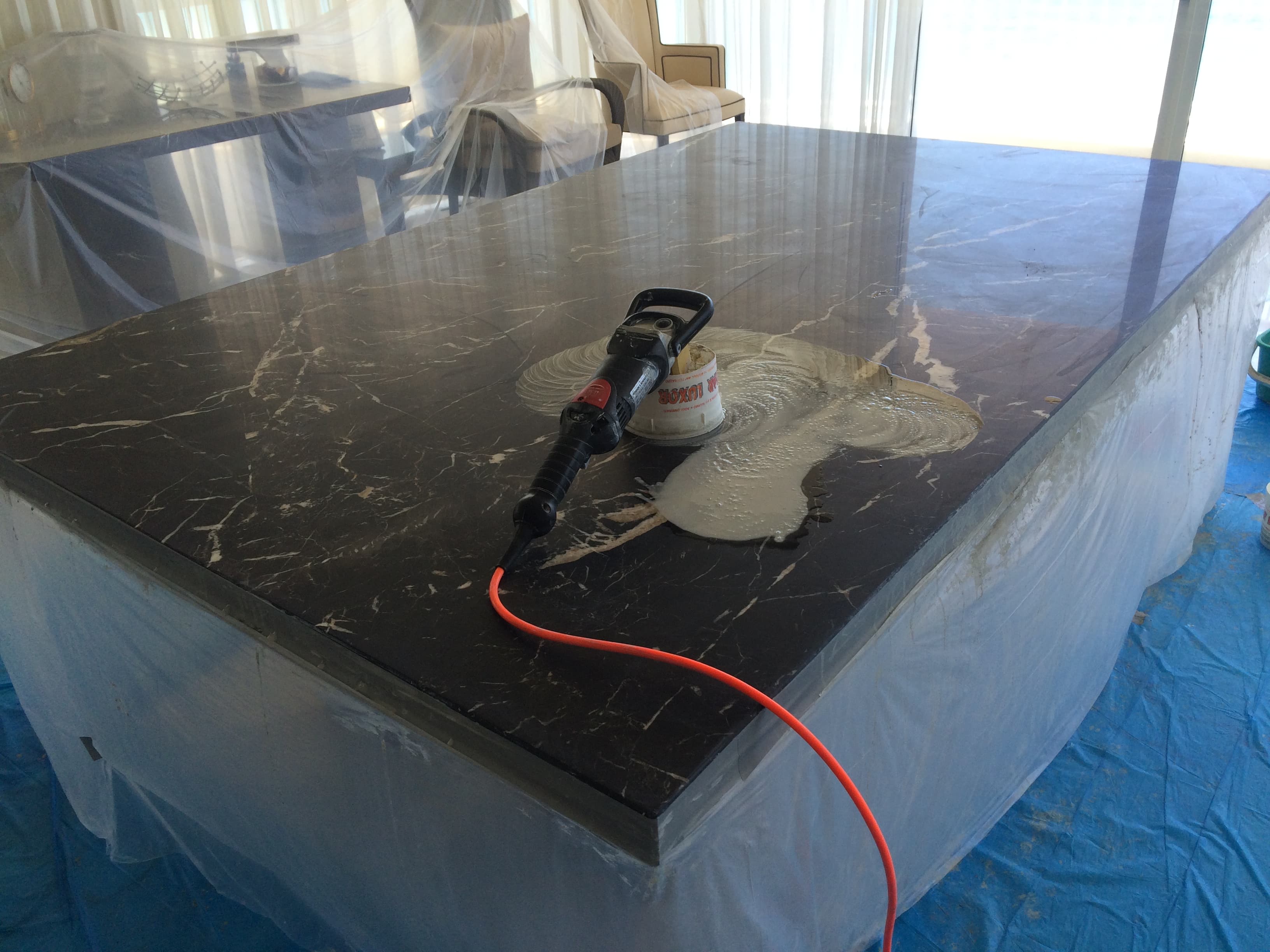
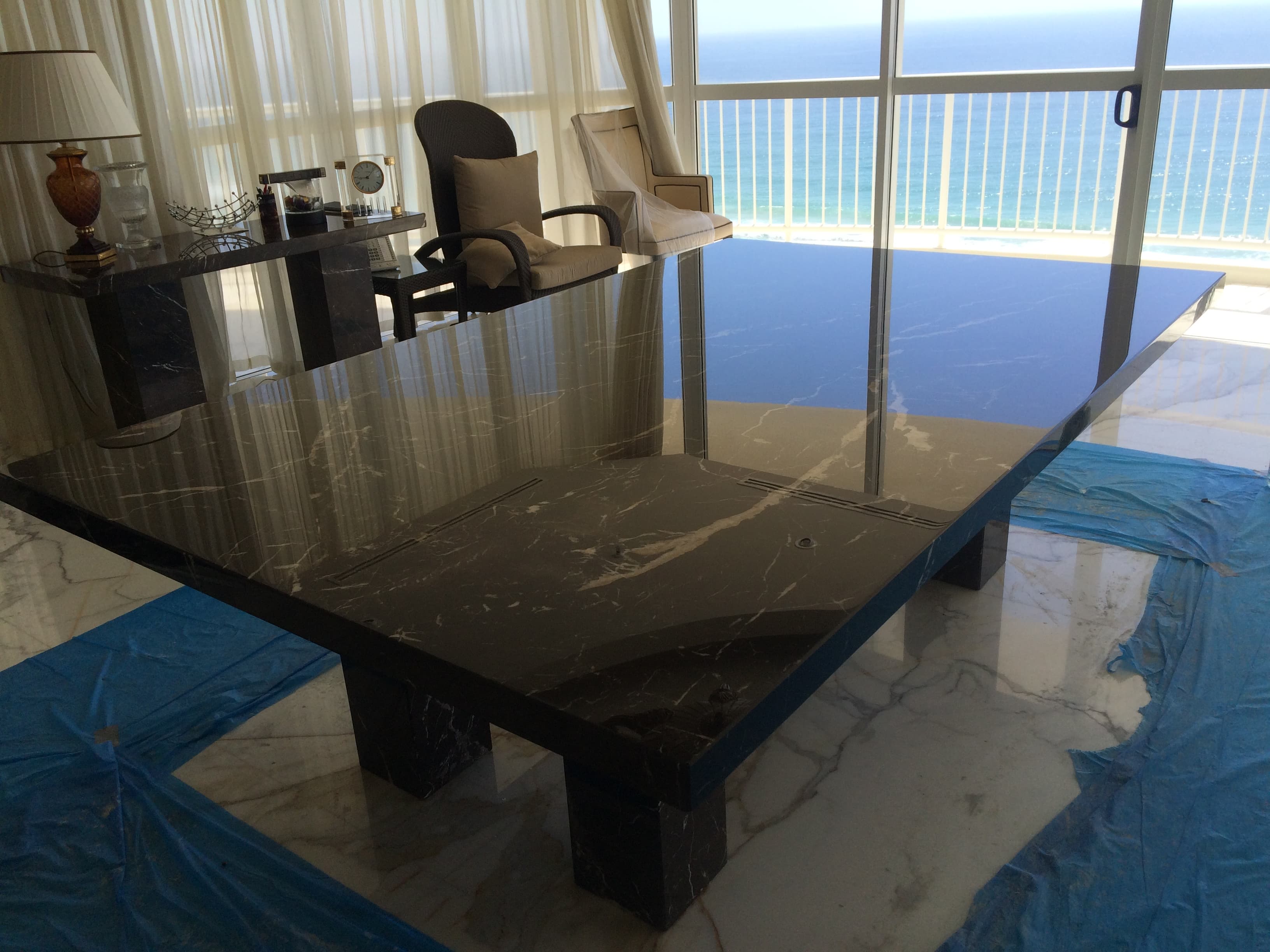
A Nero Marquina marble table we restored: surface refinished, polished and sealed. Shown as an example of our marble surface work, not as a specific acid-etch case study.

  • Before
    Nero Marquina marble table before restoration, with etching, chips and scratches
    After
    The same Nero Marquina table after grinding, polishing and sealing

    Example of Our Marble Surface Restoration Work

    Etch marks, chips and scratches removed, edges reshaped, then polished and sealed. Black marble shows every inconsistency, so the grit progression has to be identical across the whole top.

Realistic outcomes

What restoration can and cannot do

  • A sealer reduces staining but does not stop acid etching marble, so etching can happen again after restoration.
  • Very deep or repeated etching on thin stone limits how much material can safely be removed.
  • A spot repair on a worn floor may not match the surrounding finish exactly; a wider area is sometimes the better choice.

Questions

Common questions

Related

Where we work

Assessment and restoration across the Gold Coast, Brisbane and Sydney. Photographs are often enough for a first view.

Talk to Tony about your marble

Describe the surface or send photographs, and you will get a straight answer about what it needs and what is realistic.