Stone Polishing Solutions

Material guide

Marble restoration and care

Soft, calcite-based, and the stone most often damaged by ordinary cleaning products. Restores exceptionally well.

Marble is metamorphosed limestone: almost entirely calcium carbonate, relatively soft, and chemically reactive. That combination is exactly why it looks the way it does — light travels a short distance into the surface before scattering back, which is what gives polished marble its depth rather than a plastic-looking shine.

It also means marble is the stone most commonly ruined by good intentions. Most of the dulled marble we are called to has not worn out; it has been etched by a cleaning product, or scratched by grit walked across it, and then polished with something that filled the damage rather than removing it.

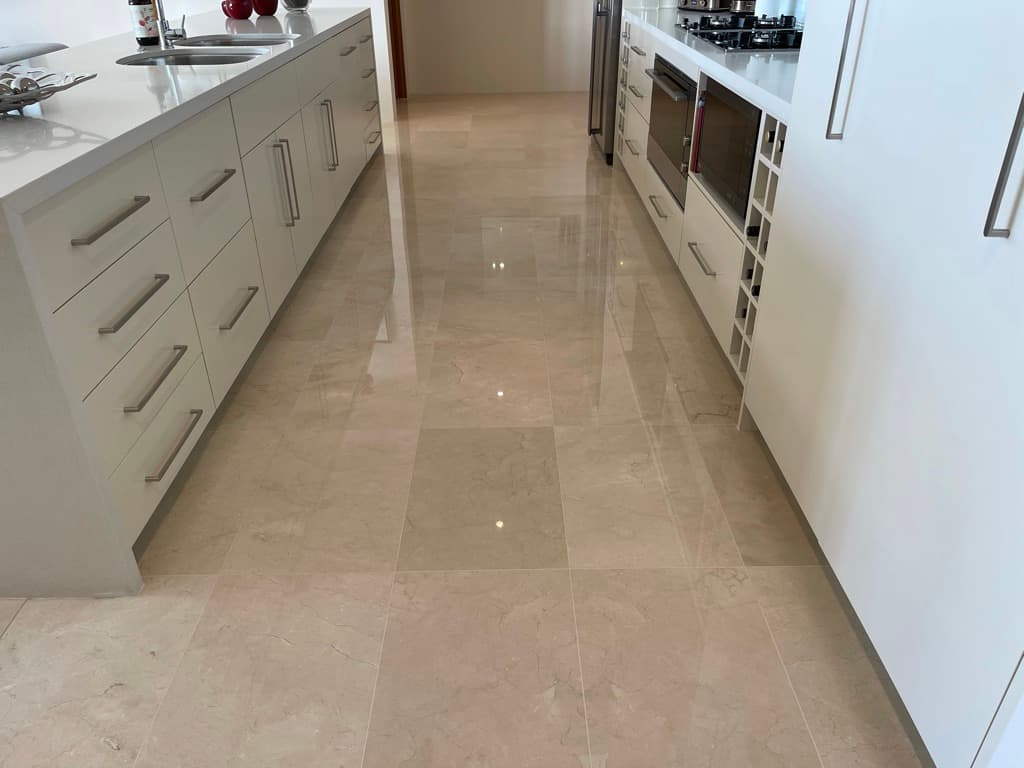
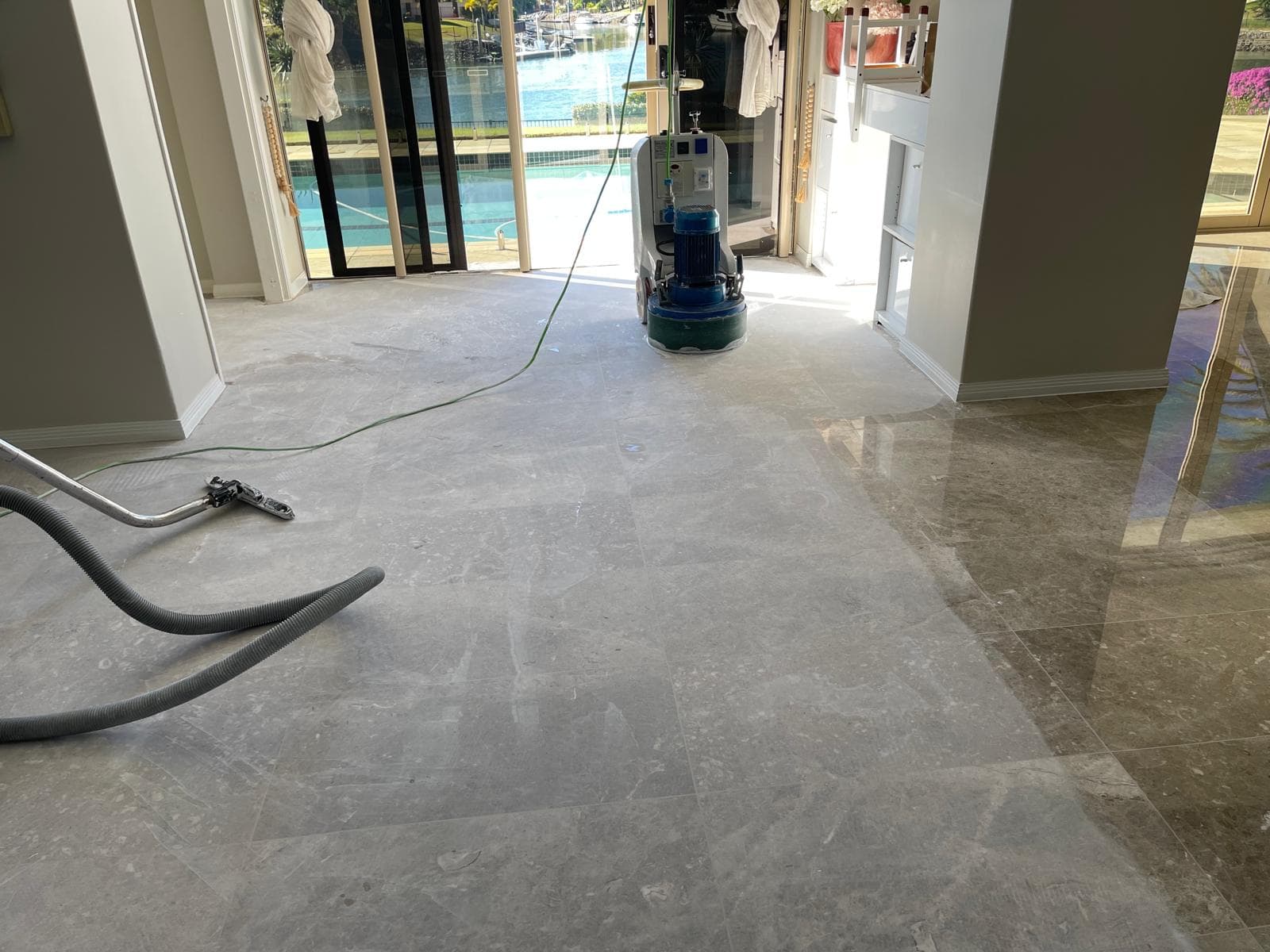
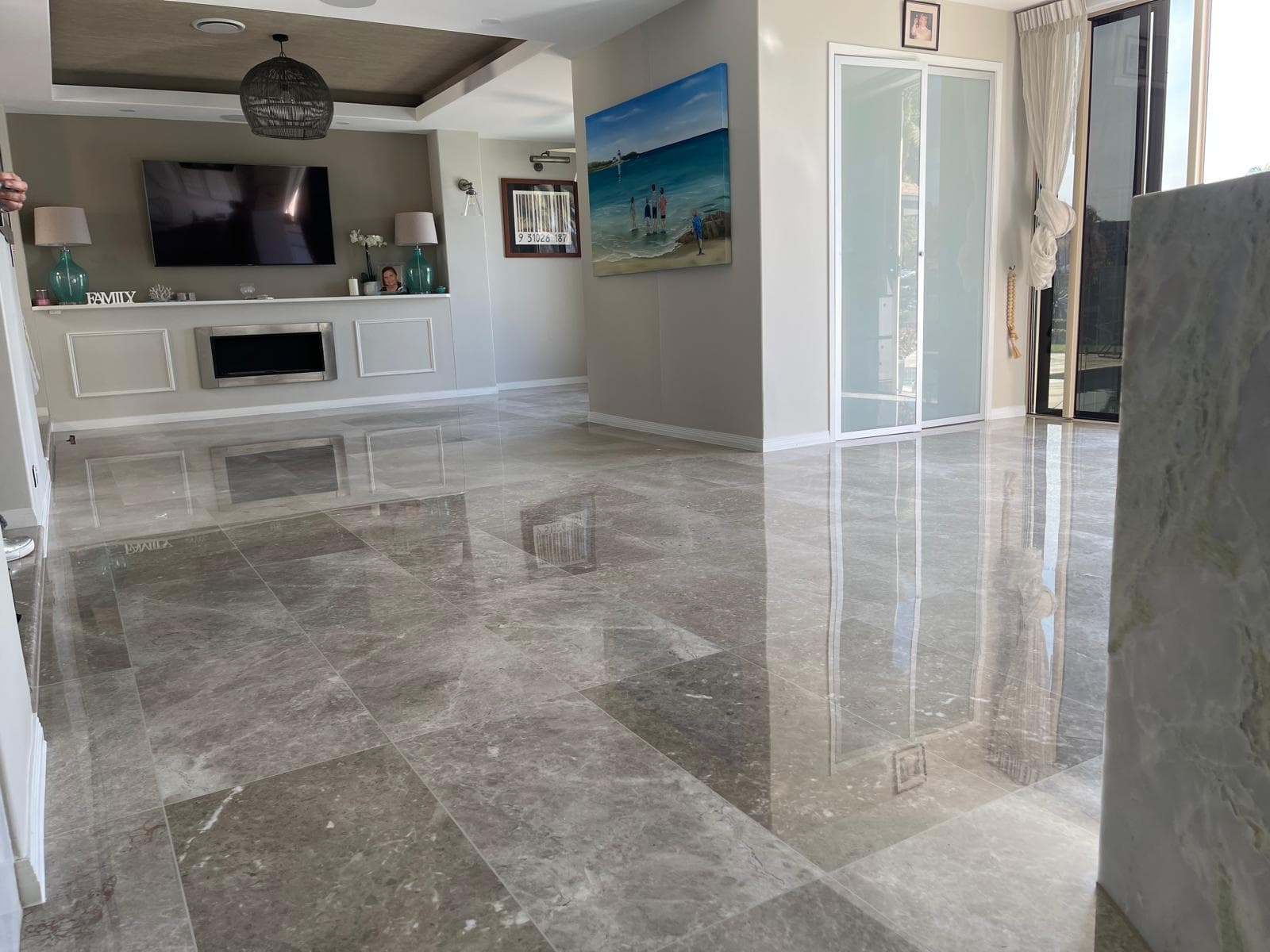
Because the damage is almost always in the top fraction of a millimetre, marble is one of the most rewarding stones to restore. The finish is not a coating being applied — it is the stone itself being cut back and progressively refined until it reflects light again.

Behaviour

What makes marble different

These properties are the reason the method changes. They are not trivia.

  • Calcite-based, so it reacts with acids of any strength
  • Soft enough to scratch from ordinary foot-borne grit
  • Takes a genuine mechanical polish with no coating required
  • Porous to a degree that varies significantly between varieties
  • Veining is structural, and some veins are softer than the surrounding stone

Common problems

What goes wrong, and whether it can be put right

Described as you would notice it, then what is physically happening, then what restoration can realistically achieve.

  1. 01

    Dull, cloudy patches, often ring-shaped or splash-shaped

    Cause
    Acid etching. Something acidic sat on the surface long enough to dissolve a shallow layer of calcite. Common sources are citrus, wine, coffee, cola, and bathroom or tile cleaners.
    Outlook
    Fully correctable in almost all cases. The etched layer is removed and the surface refinished to match the surrounding stone.
  2. 02

    A fine web of scratches that shows up in raking light

    Cause
    Foot traffic grinding fine grit against the surface, usually worst inside entries and along walking lines.
    Outlook
    Correctable. Depth determines whether it starts with a light refinement or a full grind.
  3. 03

    Dark patches that will not dry out

    Cause
    Moisture or oil absorbed into the stone. Oil-based staining behaves very differently to water and needs a drawing poultice rather than surface cleaning.
    Outlook
    Usually improvable and often fully removable, but this is the one category where an honest answer requires seeing it. Some deep oil staining in light stone never returns completely to original.
  4. 04

    A yellowed, plasticky film that is peeling or scuffing

    Cause
    A topical sealer or wax applied over the stone. It is wearing in traffic patterns because it is a sacrificial layer, not the stone.
    Outlook
    Correctable. The coating is stripped and the actual stone finished, which is usually the first time the client has seen the real surface.

Looking after it

Day-to-day care for marble

A good share of the damage we repair was avoidable. This is the short version of how to avoid it.

Do

  • Use a pH-neutral stone cleaner, or plain warm water
  • Blot spills rather than wiping them across the surface
  • Put walk-off matting at external doors — most scratching arrives on shoes
  • Use coasters and boards on benchtops and tables
  • Dust-mop floors regularly; removing grit prevents most wear

Avoid

  • Vinegar, lemon, and any descaling or lime-scale product
  • Generic bathroom, shower, and tile cleaners
  • Bleach and ammonia-based sprays
  • Steam mops on polished surfaces
  • Supermarket 'marble polish' — most fill damage rather than remove it

Finishes

Finishes achievable on this stone

The finish is chosen to suit the stone and the room it is in, not applied as a default.

  • polished
  • honed
  • matte

Other materials

We restore more than one kind of stone

Looking for a particular job rather than a particular stone? Browse stone restoration by what needs doing.

Not sure what your marble needs?

Acidic cleaners, vinegar, lemon, wine, and many supermarket bathroom sprays will etch this stone. Etching is a chemical burn into the surface, not a stain sitting on top of it, so it cannot be wiped away or bleached out — it has to be ground and refinished.