Stone Polishing Solutions

Restoration

Stone Repairs & Surface Correction

Chips, cracks, holes and lippage. Structural and cosmetic correction of damaged stone rather than replacement.

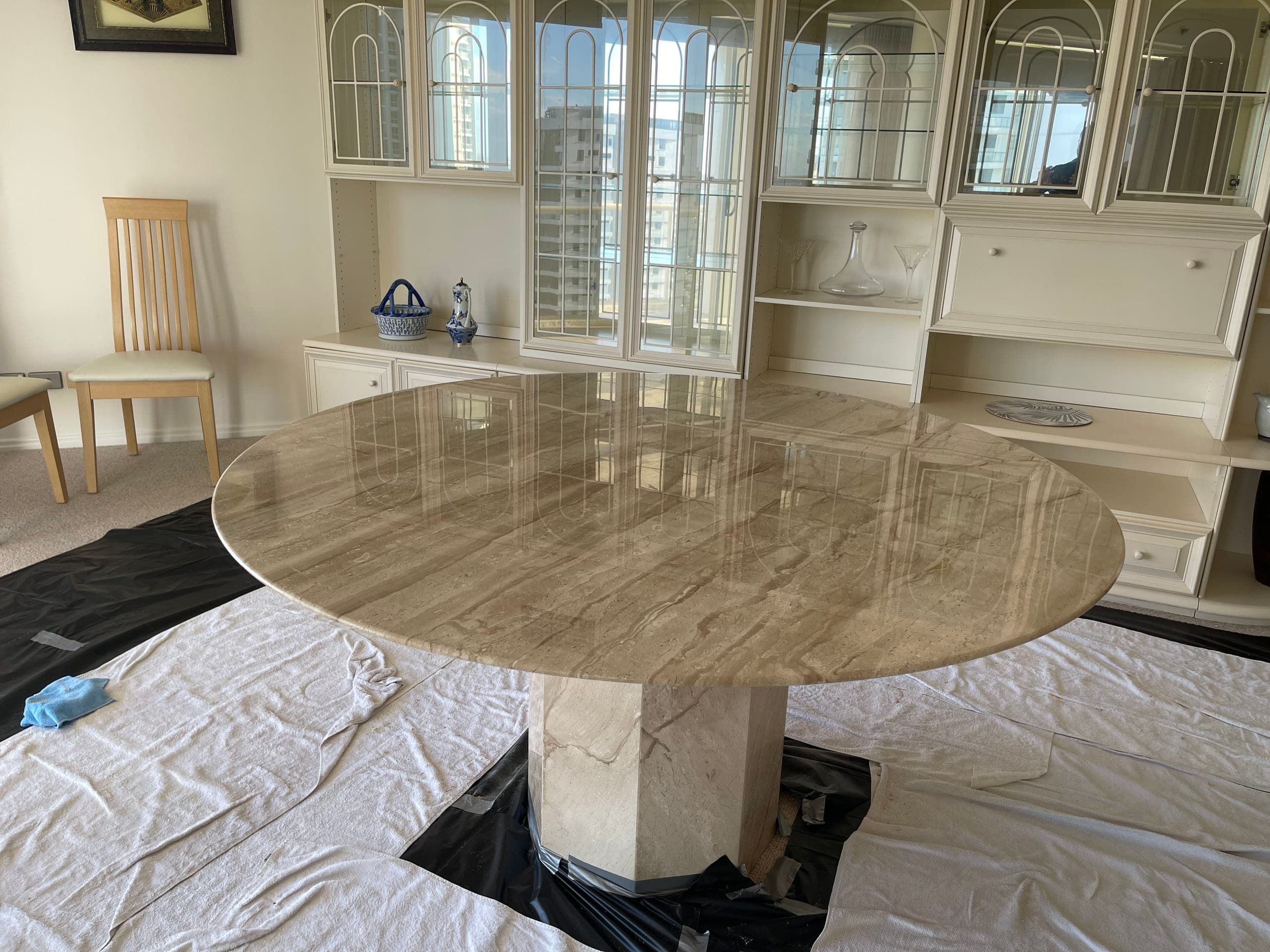
Travertine table top after repair and refinishing

The problem

What actually goes wrong

Damage to stone is usually local. A dropped pan chips an edge, a fixing cracks a tile, a void opens in travertine, or one tile sits proud of its neighbour and catches underfoot. The stone as a whole is sound; a small part of it is not.

The instinct is often to replace the piece. That introduces a new problem: a replacement tile from a different batch, or a different quarry run, rarely matches what is around it. Repair is frequently the less visible answer.

Assessment

What gets established before any work starts

These decide the method. Answering them wrong wastes an entire stage.

  • Establishing whether the damage is cosmetic or structural. A crack that runs through the body of a slab is a different matter from a chipped arris.
  • Understanding why it happened. A tile that cracked because of substrate movement will crack again after any repair.
  • Assessing colour and pattern for matching, which determines how unobtrusive a repair can realistically be.
  • For lippage, measuring the height difference and the tile thickness, which together set the limit on how much can be taken off.

Approach

How the work is decided

Described as a set of judgements rather than a fixed sequence, because that is how it genuinely works.

Repairs are built up in the damaged area and then refined level with the surrounding stone, so the repair is finished as part of the surface rather than sitting on it.

Materials are matched to the stone and to the location, tinted against the actual piece. On patterned stone this is done in stages rather than as a single fill.

Lippage correction removes material from the high side. How much is available depends on tile thickness, and where it is insufficient the honest answer is that the height difference can be reduced rather than eliminated.

Voids in travertine and other naturally holed stone are filled where the finish requires it, which is normal for that material rather than a fault being covered up.
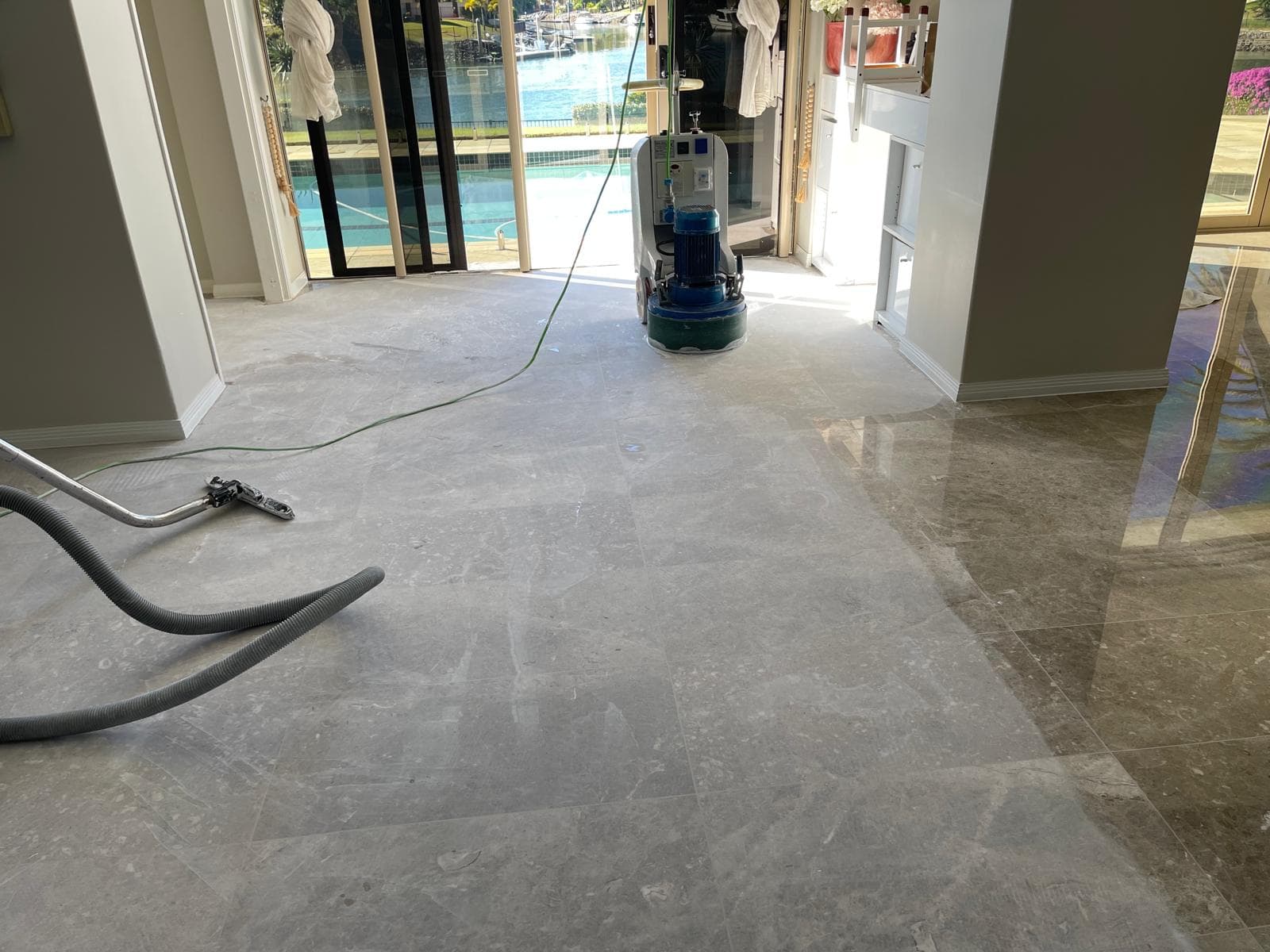
Stages that may be involved

  1. 01Repairs
  2. 02Grinding
  3. 03Honing
  4. 04Polishing

Not every stage applies to every job. Which are used is decided at assessment.

Practicalities

Things worth knowing in advance

The details that affect how the job runs, and that are easier to plan for than to discover midway.

A repair is a repair
Good repair work is unobtrusive at normal viewing distance. It is not invisible under direct examination, and any claim otherwise is overselling. Natural stone has depth, translucency and pattern that a filler approximates rather than reproduces.
Cause before cure
Where damage indicates movement, a failed fixing or water ingress, repairing the surface without addressing the cause simply delays a recurrence. Establishing why matters as much as fixing what.

Limits

What restoration will not fix

Stated plainly, because finding out on the day suits nobody.

  • Structural cracks caused by ongoing movement will recur unless the movement is dealt with.
  • Where a large area of stone is missing, replacement of the piece may be the only sound option.
  • Matching is hardest on strongly veined or dramatically patterned stone.

Materials

Stone this applies to

Each material behaves differently. The reference pages cover how, and how to look after them.

Questions

Common questions

Have the stone assessed properly

Send photographs and a short description and you will get a straight answer about what the surface needs — including if the answer is that it does not need us.