Stone Polishing Solutions

Marble · Technical guide

Marble Floor Lippage Removal & Surface Levelling

When tile or slab edges sit at different heights, the floor catches underfoot and reflections break at every joint. How lippage is assessed, when diamond grinding can level it, and what can realistically be achieved.

Lippage is the height difference between adjacent tiles or slabs. It usually comes from the original installation, through uneven bedding, tile warp or the laying method, and sometimes from later movement. Even a small step can catch a heel or a broom, and it is often more visible than people expect.

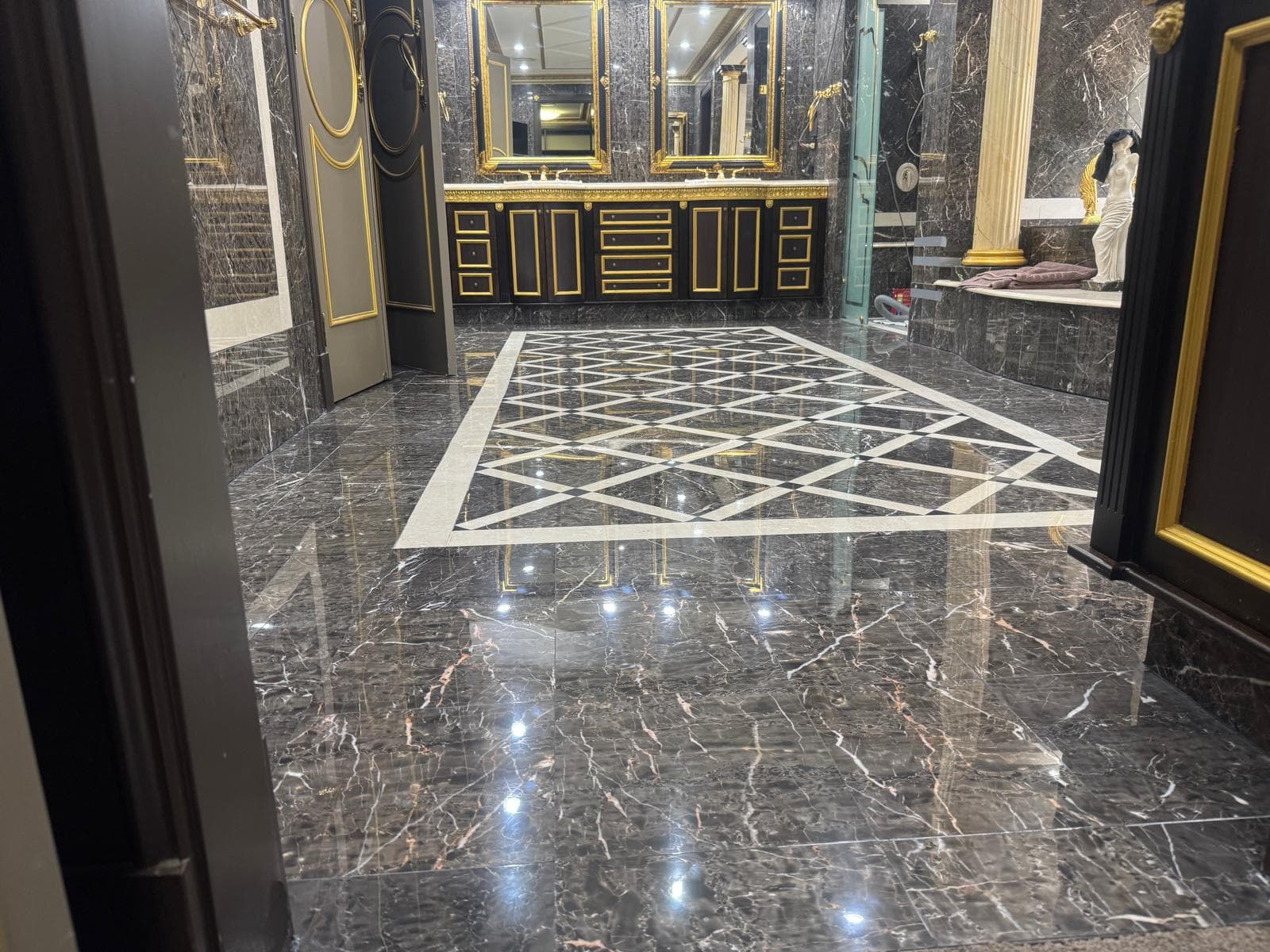
On polished marble, lippage shows up as broken reflections. A line of light reflected across the floor steps and kinks at every joint instead of running straight through, and that is often noticed before the edges are felt underfoot.

Assessed first

The condition decides the method

  • Measuring height differences across the floor and at the joints
  • Establishing tile thickness, which sets how much material is available
  • Checking for hollow, loose or cracked tiles that need attention before grinding
  • Confirming the stone and the finish required, which determine the stages after levelling

Marble Floor Lippage Removal & Surface Levelling in detail

Uneven edges and interrupted reflections

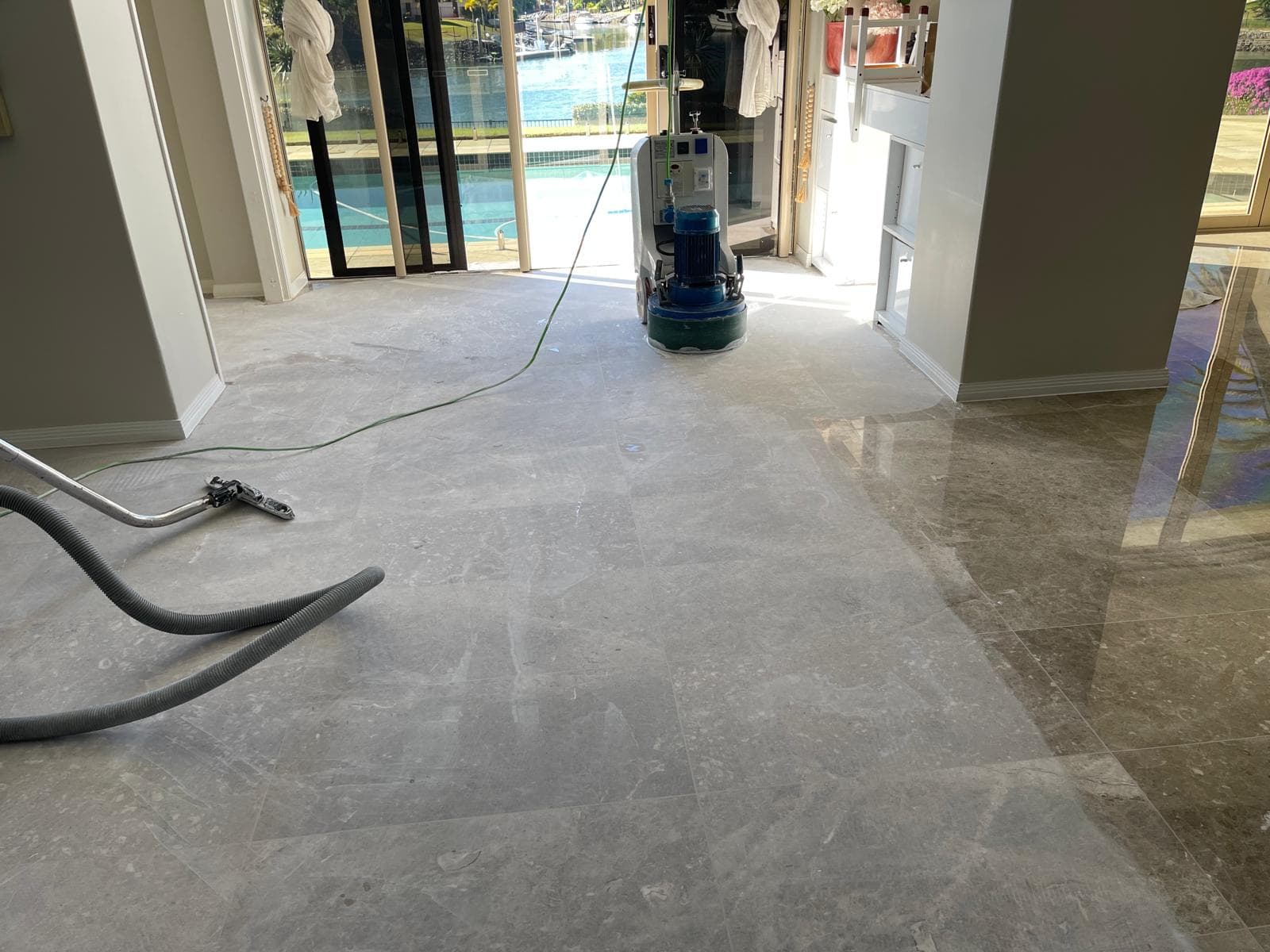
Lippage is easiest to see in raking light, or by looking along the floor toward a window. Light catches on the high edge of each tile and the reflection breaks into separate panels.

Levelling the floor makes the surface continuous again, so the finish can be refined as a single plane rather than tile by tile.

Mechanical diamond grinding

Where levelling is appropriate, the high edges are ground down with diamond tooling until adjoining tiles sit in the same plane. The floor is then refined through progressively finer abrasives to remove the grinding scratch pattern and brought to the agreed finish.

The starting abrasive and the number of stages depend on how much height has to come off, the stone itself and the finish required. Edges and perimeters that a large machine cannot reach are worked separately so the whole floor matches.

Grinding produces slurry or fine dust. Work is planned around wet methods or extraction and protection of adjoining areas, but no stone grinding process is entirely free of mess.

Large residential and commercial floors

On large open areas the eye reads the floor as one surface, so inconsistencies across a long run are easier to see and levelling matters more. Work is sequenced around access, adjoining finishes and, in commercial spaces, occupancy or trading hours.

Levelling often exposes the joints. Where grout or filler is failing, joint restoration is usually planned alongside it.

Levelling limitations and realistic outcomes

How much can be taken off depends on tile thickness and how the floor was laid. Thin tiles have a real limit, and on those floors the honest outcome may be a significant reduction in lippage rather than a perfectly flat surface.

Hollow or loose tiles have to be identified first. Grinding over a tile that is not properly bonded can crack it, so it may need re-fixing or replacing before levelling.

Where movement in the substrate caused the lippage, grinding corrects the surface but not the cause, and the problem can return.

From the Workshop — Tony Mastrorillo

40+ Years of Hands-On Stone Restoration Experience

Lippage removal is a judgement about how much stone a floor can afford to lose. The aim is not to grind as hard as possible; it is to bring the surface into one plane while keeping as much of the original stone as practical.

Tony looks at tile thickness, how the floor was laid and the finish required before deciding whether levelling is appropriate, and how far it should go.

Realistic outcomes

What restoration can and cannot do

  • On thin tiles, lippage may be reduced rather than removed entirely.
  • Lippage caused by ongoing substrate movement can return after levelling.
  • Levelling removes stone. A floor that has already been ground several times has less left to work with.

Questions

Common questions

Related

Talk to Tony about your marble

Describe the surface or send photographs, and you will get a straight answer about what it needs and what is realistic.