Stone Polishing Solutions

Travertine · Technical guide

Travertine Hole Filling, Surface Repair & Honing

Travertine is full of natural voids, and the fills that close them do not last as long as the stone. How open holes and failed fills are repaired, and how the surface is honed to a consistent, low-sheen finish.

Travertine forms with natural holes and channels. Most interior travertine is filled at the factory so the surface is closed, but those fills are a different material from the stone, and over time they wear, shrink, discolour or drop out. The result is a floor that looks pitted or dirty even though the stone itself is sound.

Open holes collect dirt and moisture, and their edges tend to break down so they grow. Repairing them early is usually simpler than dealing with a surface that has opened up across the whole floor.

Assessed first

The condition decides the method

  • Establishing whether the travertine was meant to be filled, open or partly open
  • Identifying failing or loose fills and how widespread they are
  • Reading the colour range of the stone for fill matching
  • Confirming the finish required and whether the area is interior, wet or outdoor

Travertine Hole Filling, Surface Repair & Honing in detail

Natural voids and damaged fills

Not every hole is a fault. Some travertine is meant to be left open or partly open, especially outdoors, and filling it changes both its character and how it behaves. The first question is what the surface was meant to be.

Where the surface was filled, failed fill is removed and the voids are cleaned out before new fill goes in. New fill placed over loose old fill or dirt is unlikely to last.
Colour-matched repairs

Travertine ranges from ivory through walnut and silver, often within a single tile. Fills are tinted against the actual stone so they sit with the surface rather than against it. A good match is unobtrusive at normal viewing distance, but natural stone varies too much for any fill to be invisible up close.

The fill material is chosen for the location. Interior floors, wet areas and outdoor stone ask different things of a repair, so no single product suits every job.

Mechanical honing to a consistent low-sheen finish

After filling, the surface is honed so the fills and the stone are cut back level and refined together. That is what makes a repair part of the surface rather than something sitting on top of it.

Honing also addresses wear, light etching and scratching, and brings the floor back to an even, low-sheen finish. Travertine can be polished, but most travertine floors are specified honed, and a consistent honed surface is usually the most practical result for everyday use.

Material-specific assessment and aftercare

Whether sealing is worthwhile depends on the stone, where it is and how it is used. A porous interior floor in a kitchen may benefit from an impregnating sealer; outdoor travertine that needs to breathe may be better treated differently or left unsealed.

Day to day, travertine needs pH-neutral cleaning, because it is calcite-based and etches like marble. High-pressure washing is best avoided, as it can strip fills and open voids again.

From the Workshop — Tony Mastrorillo

40+ Years of Hands-On Stone Restoration Experience

Travertine shows clearly why the method has to follow the stone. One floor can have sound stone, failing fills and open voids side by side, and treating it as a single surface with a single product rarely lasts.

Tony looks at what the travertine was meant to be, how the existing fills have failed and where the stone is used before deciding how to repair and finish it.

From our work

Example of our travertine work

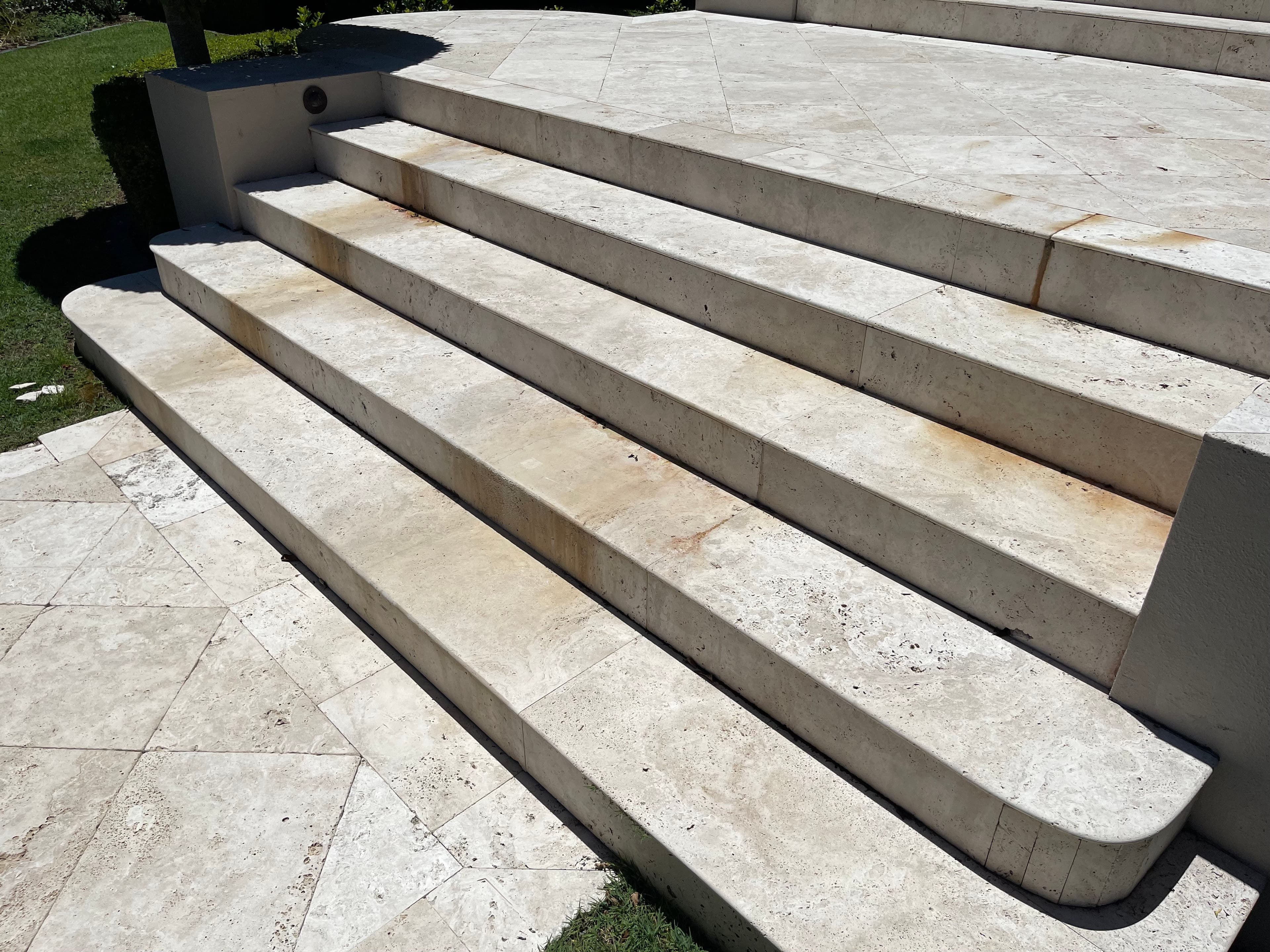
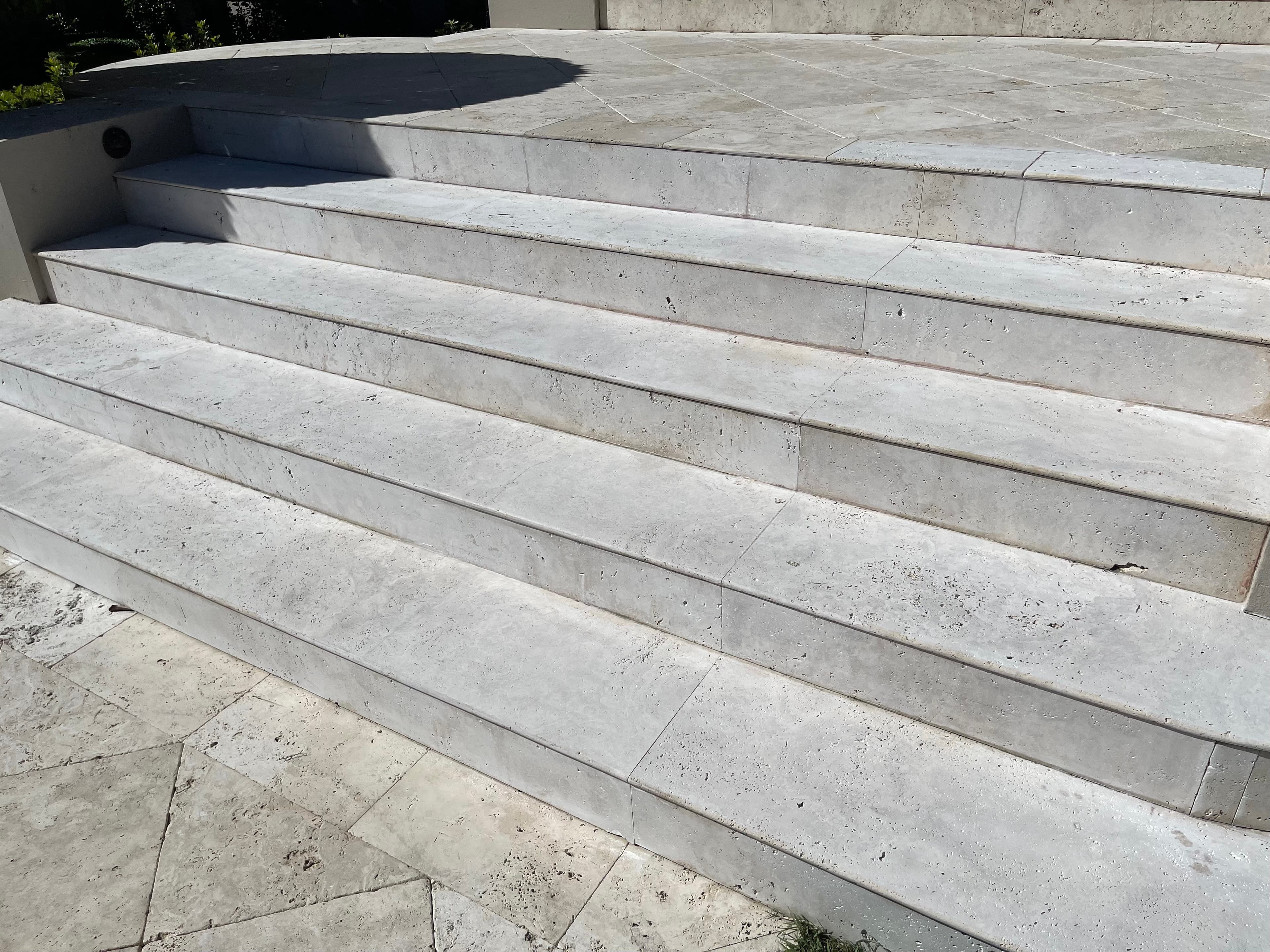
Outdoor travertine entrance stairs we restored, keeping the stone's natural texture and pores. Shown as an example of our travertine work; this job is not documented as void filling or epoxy repair.

  • Before
    Natural travertine entrance stairs before restoration, with orange-brown staining across the treads and risers
    After
    Restored natural travertine entrance stairs

    Example of Our Travertine Restoration Work

    Restoration of natural travertine entrance steps, improving surface appearance while preserving the stone's characteristic texture and natural pores.

Realistic outcomes

What restoration can and cannot do

  • A fill is a repair, not stone, and will not match the natural stone perfectly under close inspection.
  • Fills can wear and need attention again over time, especially in high-traffic and outdoor areas.
  • Cracking caused by structural movement has to be dealt with separately; filling does not fix it.

Questions

Common questions

Related

Where we work

Assessment and restoration across the Gold Coast, Brisbane and Sydney. Photographs are often enough for a first view.

Talk to Tony about your travertine

Describe the surface or send photographs, and you will get a straight answer about what it needs and what is realistic.